

THE SHADOWS ARE SURFACING — What Fear Reveals About Us Field-Reading, Week 43
When Fear Becomes Our Normal
There is something happening in our human relationships that I believe deserves our deepest attention. Everywhere I turn, I hear stories about people behaving in ways that leave others hurt, confused and increasingly exhausted. Colleagues describe workplaces where hostility, manipulation, dishonesty and resentment seem to be growing. People speak about relationships becoming more difficult, conversations becoming harsher, and an atmosphere of tension that follows them into ordinary situations. There is a sense that something is being exposed, that behaviors and emotional patterns we once managed to keep beneath the surface are becoming increasingly visible. And as I listen to these stories, I find myself returning to one of the most important discoveries of my own life: how deeply fear can shape a human being without that person even recognizing that they are afraid.
For many years, I lived with an enormous amount of fear and anxiety. I was stressed, constantly moving, constantly thinking, constantly responding to the demands of life. People around me could see that I was stressed, and sometimes they told me so. But I could not see what was happening inside me. I did not understand that fear had become so deeply embedded in my inner world that I experienced it as my natural state of being. My nervous system had learned to live with tension, vigilance and emotional pressure, and because this was the reality I had known for so long, I had nothing to compare it with. The patterns were familiar. They were automatic. They were woven into the way I thought, felt, reacted and moved through the world. I believed I was simply living my life, doing what needed to be done, carrying my responsibilities and finding my way through the challenges that came. Only much later did I begin to recognize how profoundly fear had influenced my entire experience of being human.
My Hero’s Journey — Discovering the Fear I Could Not See
In 2013, my life began to change in ways I could never have anticipated. What followed became my Hero’s Journey, my Dark Night of the Soul, and a profound process of transformation that would eventually change my relationship with myself, my body and the world around me. At the time, I could not fully understand what was happening. Much of what I had built my identity around began to fall away, and I found myself confronting layers of emotional pain, unconscious patterns and deeply held beliefs that had shaped my life for decades. I began to recognize how much of my existence had been organized around survival, responsibility, expectations and the constant activity of what I now call the monkey mind. My thoughts rarely rested. My body carried tension that I had stopped noticing. Fear had become so familiar that I could no longer distinguish it from who I believed myself to be.
It was only through the gradual process of transformation, through releasing old patterns and learning to inhabit a different inner state, that I began to see how deeply conditioned I had been. I often describe this experience as a process of deprogramming and detoxification, because that is how it felt to me: layer after layer of old emotional conditioning became visible, and gradually I learned to respond to life differently. I also began to understand the relationship between my emotional world and the physical suffering I had experienced. My body had carried pain, illness and imbalance, and I came to recognize how profoundly prolonged stress and fear had influenced my physical experience. Chronic stress can affect sleep, muscle tension, pain sensitivity and many other bodily processes, although illness and pain can have multiple causes. In my own spiritual language, I began to understand what it meant to carry a pain body, an accumulated experience of suffering that seemed to live within my physical being. As my inner life changed, my relationship with my body began to change as well.
Today, I live from an inner state that is profoundly different from the one I knew before. I experience greater peace, balance, coherence and a natural sense of flow with what I call my Divine Design. My mind no longer dominates every moment of my existence. I have learned to recognize fear when it arises, to listen to my body, and to return to the stillness within me. This does not mean that life has become free from challenges or that I never experience difficult emotions. It means that my relationship with those experiences has changed. I no longer organize my entire existence around the need to anticipate, control or protect myself from everything that might happen. This is also why I now can recognize patterns in human behavior that I once lived inside without understanding them.
The Shadows We Carry Into Our Relationships
Through my short videos, I receive many responses from people who wonder how I can speak about consciousness, human suffering, spirituality and the deeper architecture of life with such certainty and clarity. Some are curious, some are grateful, and others challenge what I share. I understand that it can be difficult to recognize the possibility of inner peace when your own mind is constantly occupied by fear, anxiety and the demands of everyday life. I know this because I have lived there myself. I know what it means to be so identified with the activity of the mind that silence feels unfamiliar. I know how difficult it can be to imagine another way of living when tension has become your normal. And I know how much courage it can take to begin questioning the patterns that have shaped your entire understanding of yourself.
This is also why I believe we need to look more deeply at what is happening in our relationships today. When human beings live with prolonged fear and insecurity, their capacity to regulate emotions, interpret situations calmly and remain open to other people’s perspectives can become strained. Fear may express itself through irritation, defensiveness, suspicion, anger or an increasing need for control. Some people withdraw, while others become confrontational. Some attempt to protect their position through manipulation, dishonesty or the rejection of anyone who challenges them. These behaviors have different causes, and fear never removes personal responsibility for harmful choices. Yet beneath many defensive reactions, we may find a human being who has lost contact with a sense of safety within themselves. When we understand this, we begin to see how important emotional awareness and inner regulation are for the quality of our relationships.
And there is another dimension that we cannot ignore. Many of the patterns we carry have developed through our families, our childhood experiences, our communities and the cultures in which we were raised. We inherit ways of responding to conflict, expressing emotions, relating to authority and protecting ourselves from rejection. Some patterns are passed through learned behavior and family relationships, while others may be influenced by the lasting effects of stress across generations. In my spiritual understanding, these patterns also form part of what I describe as our karmic architecture: the recurring experiences through which we are invited to become more conscious. When life places us under pressure, familiar patterns can become more visible. We may find ourselves reacting in ways we thought we had outgrown, or encountering aspects of our personality that we have never fully understood. This is where the work of transformation begins, through our willingness to recognize what we carry and take responsibility for how we live it.

When Trust Begins to Disappear — Even Here in the Arctic
I have also been reflecting on what is happening here in Northern Norway, where I live. For generations, many of our communities have been characterized by a remarkable degree of social trust. People have known their neighbors, helped one another and lived with a sense of freedom that is difficult to explain to those who have never experienced it. Here around Jægervatnet in Lyngen, we have been accustomed to leaving our doors unlocked. There was a quiet understanding that our homes were safe, that people respected one another’s belongings, and that the world immediately around us was a place where we could relax. This kind of trust becomes part of the atmosphere of everyday life. You do not necessarily think about it until something happens that changes it.
Now, we are hearing about thefts and dishonest behavior that have begun to affect this sense of security. People who once left their doors open are becoming more cautious, and we have found ourselves needing to lock our own doors. On the surface, this may seem like a small practical change. But emotionally, it represents something much larger. A door that was once left open because we trusted our surroundings is now closed because that trust has been challenged. The physical act of turning a key becomes a reminder that our relationship with the world around us is changing. I do not believe we should interpret every incident as proof that humanity is becoming worse, or allow the actions of a few individuals to make us suspicious of everyone. Yet I cannot ignore the sadness of watching a familiar sense of openness become more fragile. We are being reminded that trust is precious, that it requires care, and that our choices affect the emotional atmosphere in which other people live.
Last week, in The Architecture of Collapse, I explored the growing crisis of trust in our institutions, systems and positions of authority. This week, I find myself looking at the same question from an even more intimate perspective. What happens when the crisis of trust enters our homes, workplaces, friendships and communities? How do we respond when the people around us become more reactive, when conversations become increasingly difficult, and when the atmosphere of everyday life seems filled with tension? We can protect ourselves without allowing suspicion to become our permanent inner state. We can establish boundaries without abandoning compassion. And we can recognize that the behavior of others does not have to determine the consciousness from which we choose to live.
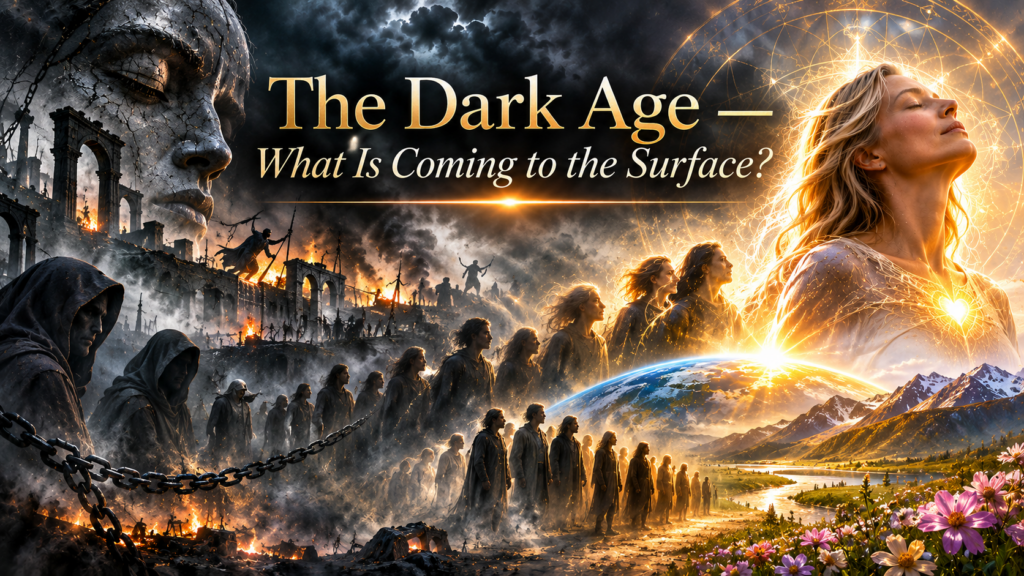
The Dark Age — What Is Coming to the Surface?
For a long time, I have understood humanity’s journey through the perspective of consciousness and the gradual transformation of the patterns we have created together. I describe much of our collective history as a period of darkness, an age in which fear, separation, domination, suffering and unconscious patterns have profoundly influenced human civilization. I use the expression the Dark Age to describe this condition of human consciousness, rather than a single historical period with clearly defined boundaries. We can see its consequences in our wars, our relationships, our institutions, our treatment of the Earth and the ways we have learned to exercise power over one another. We have created extraordinary achievements, and we have also created systems and habits that carry the consequences of our unresolved fear.
From this perspective, I experience the present period as one in which many of these patterns are becoming increasingly difficult to ignore. We are seeing manipulation exposed, institutions questioned, relationships challenged and individuals confronted with behaviors that no longer remain hidden behind familiar roles. This surfacing creates an opportunity for transformation. We cannot consciously change what we are unwilling to recognize. We cannot create a more compassionate civilization while refusing to examine the ways fear and separation influence our choices. And we cannot expect future generations to live differently if we continue passing on the same patterns without questioning them.
I have spoken in my video about the coming five years, and my personal sense that we are moving through an especially demanding period of exposure and transformation. I cannot know precisely how the world will develop, or promise that suffering and conflict will diminish according to a particular timeline. But I want to encourage those who feel overwhelmed by what they are witnessing to remain connected to hope, patience and the possibility of change. We do not need to endure harmful situations without protection or wait for the world to transform before taking action. The work is already here, in the choices we make, the patterns we recognize, the relationships we nurture and the courage we develop to live differently.
Our Children Carry the Possibility of a Different Future
And this brings me to something I feel very deeply about: the children who are growing up in our world today. The younger generations carry extraordinary possibilities for the future, and our responsibility as adults is to create the conditions in which those possibilities can develop. Children arrive with their own temperaments, sensitivities, capacities, questions and ways of experiencing life. Yet so often, we attempt to shape them according to the expectations, fears and unresolved patterns of the generations that came before them. We ask them to fit into systems we have already created, to adapt to our understanding of success, and to become what we believe they should be.
One of the most important things we can offer our children is what I call sacred space: an environment in which they are met with love, safety, respect, appropriate boundaries and the freedom to discover who they are. As parents, teachers and caregivers, we have an opportunity to become conscious of the emotional and relational patterns we bring into their lives. We can learn to recognize when our own fears are influencing the expectations we place upon them. We can help children develop emotional regulation, discernment, compassion and the confidence to trust their own growing understanding of the world. This is also part of allowing them to work through the karmic and ancestral patterns they carry. Their development deserves to be supported with patience, understanding and genuine curiosity about the human beings they are becoming.
When I speak about the children of the future carrying their own curriculum, I mean that we must learn to listen more deeply to what each child brings into the world. We need educational environments that recognize individuality, encourage independent thinking and support the development of the whole human being. Our children will inherit the consequences of the civilization we have created, but they will also participate in shaping what comes next. The sacred responsibility of our generation is to give them a foundation of love, emotional safety and wisdom from which they can make choices of their own.
Five Books for Understanding the Human Journey
Much of what I have been exploring in these weekly Field-Readings is also woven through the books I have written this year. As I look at the themes emerging in our world today, I feel an even deeper appreciation for the journey of writing them, because each book approaches a different dimension of the human experience. Together, they offer a framework for understanding suffering, consciousness, inherited patterns, inner peace and the possibilities of creating a more compassionate civilization.
In Weltschmerz — The Hidden Weight We All Carry, And How It Takes Lives, I explore the suffering that human beings carry within themselves and the profound consequences of emotional pain that remains unseen or unexpressed.
In The Many Faces of Christ Consciousness — The Architecture of Divinity, I explore the possibility of living from a radically open heart, recognizing our deeper connection with life and allowing spiritual understanding to become part of our everyday experience.
The Architecture of Peace — Peace as a Design Principle examines how peace can become an inner foundation from which we live, relate and participate in the world.
The Architecture of Karma — The Design of Cause Within a Living Universe invites us to recognize recurring patterns and explore the relationship between our experiences, our choices and the deeper lessons of human life.
And Sisterhood — The Architecture of a New Civilization looks toward the future, exploring how we can create communities and social structures grounded in cooperation, responsibility, mutual respect and a more conscious understanding of our shared humanity.
These books will be available for purchase from November, and I warmly invite you to explore them. I have written them from my own experiences, studies, reflections and spiritual understanding, with the hope that they may offer meaningful perspectives to those who are questioning the world around them and searching for a deeper understanding of their own lives. Each book can be read individually, but together they form part of a larger architecture that moves from recognizing our suffering and unconscious patterns toward developing inner peace and participating in the creation of a different human future.
What We Choose to Carry Forward
As I close this week’s Field-Reading, I return to the journey that began for me in 2013. I remember the woman I once was, living with so much fear that she could no longer recognize it. I remember the exhaustion, the physical pain, the constant activity of the mind and the enormous responsibility I felt for everything around me. And I remember how impossible it would have seemed to imagine the inner life I experience today. That transformation did not happen overnight. It required me to encounter parts of myself that I had never fully understood, to question beliefs that had shaped my identity, and to learn an entirely different relationship with my own thoughts, emotions and body.
This is why I continue to speak about the possibility of transformation, even when the world appears increasingly difficult to understand. I know from my own experience that a human being can change profoundly. I know that the patterns we have lived with for decades do not necessarily have to define the rest of our lives. And the same willingness to become conscious of our patterns is essential if we are to create healthier relationships, communities and societies.
The shadows that are surfacing in our world deserve our attention. We need to confront dishonesty, protect those who are vulnerable, challenge manipulation and hold people accountable for the harm they cause. At the same time, we need to examine what is happening within ourselves. Every moment of fear, every defensive reaction, every impulse to control or condemn another person gives us an opportunity to become more conscious of the inner state from which we are living.
We cannot determine every event unfolding around us. But we can continue developing our capacity to respond with clarity, courage, compassion and discernment. We can learn to recognize fear without allowing it to become the foundation of our relationships. We can protect our homes while keeping our hearts open. We can teach our children that kindness and strength belong together. And we can become more responsible for the emotional atmosphere we contribute to the world.
The shadows are surfacing. And the question before us is how consciously we are willing to meet them.
With love from the Arctic, Ann-Peggy Divine