
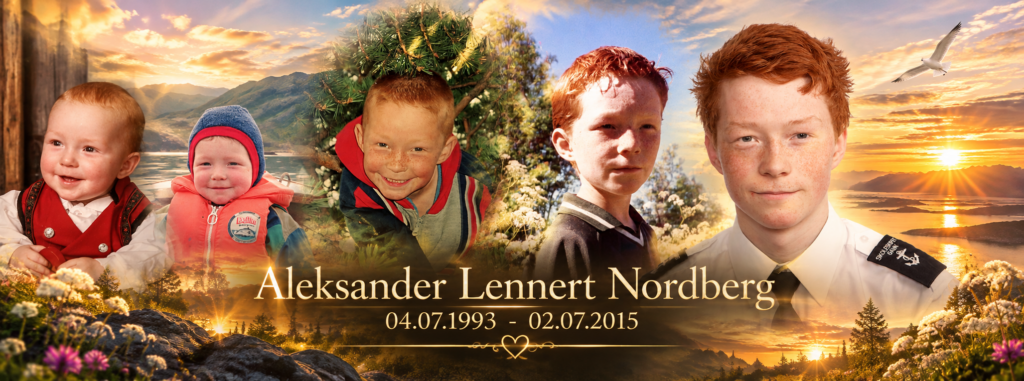
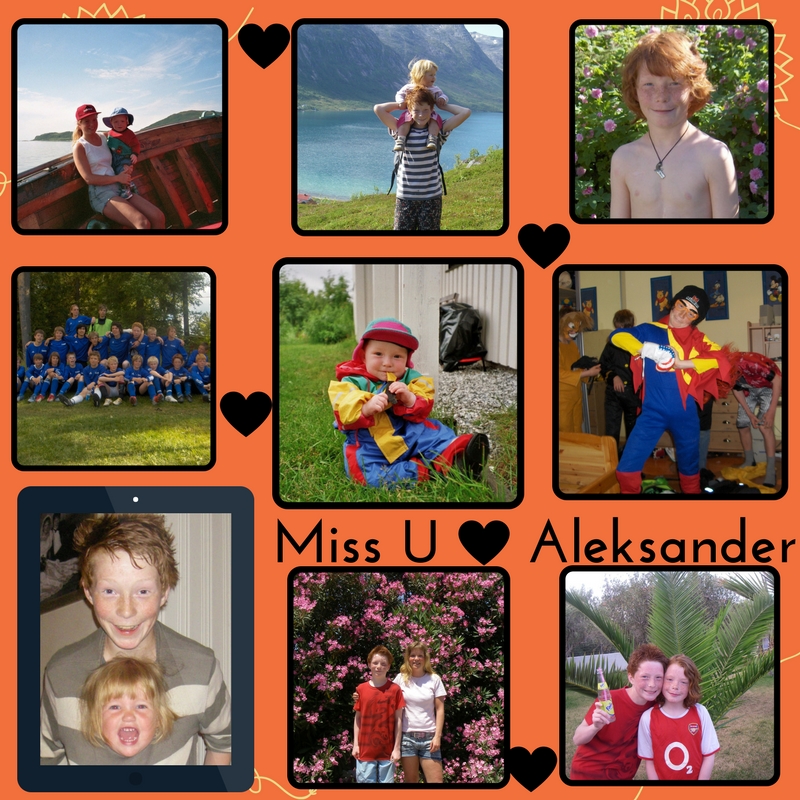
Aleksander Lennert Nordberg 04.07.1993 – 02.07.2015
A Mother’s Last Words to Her Son
This video was recorded just one day after my son Aleksander died by suicide on July 2, 2015. I was still in profound shock and grief, trying to comprehend a world in which my firstborn son was no longer alive. I share these five minutes because they capture something words written years later can never fully recreate: the raw and immediate grief of a mother speaking to her beloved son. What follows is my account of the day we lost Aleksander, the hours that followed, and the pain we were only beginning to understand.
The Day We Lost Aleksander — July 2, 2015
Thursday, July 2, 2015, will forever be etched into our bodies and souls. It was the day my son Aleksander took his final breaths and died by suicide.
That afternoon, my two daughters and I had been enjoying a girls’ day out at Jekta Shopping Centre in Tromsø. We had spent time together at a café, done some shopping, and enjoyed an ordinary summer day. As the clock approached six in the evening, we began driving home. One of my daughters had invited a friend to stay with us, so there were four of us in the car.
As we passed through Storelva, a neighbourhood about one kilometre from Aleksander’s apartment, a police car and an ambulance overtook us with their emergency lights flashing and sirens sounding. There was unusually little traffic for that time of day, and we ended up driving fairly close behind them.
Then I noticed that both emergency vehicles had stopped just below Aleksander’s home. As we came closer, I realised they were parked in his driveway. Immediately, I felt intense, cramping pain in my stomach and chest. The colour drained from my face, and my entire body went into a state of alarm. It was as though I had entered a world of my own, separated from everything around me.
I pleaded inwardly for this to have nothing to do with Aleksander. Yet every nerve in my body seemed to know that it did. I watched the emergency personnel and police officers climb the stairs and enter the house. Whatever had happened, I knew that what awaited me inside could only be terrible. There was room to park in the driveway. I stopped the car and gathered every ounce of strength I had. One thing was absolutely certain: nothing was going to prevent me from entering that house. I was determined to find Aleksander.
The Moment My World Collapsed
I climbed the steps to the open front door, walked through the entrance and continued upstairs to the living room. I was only seconds behind the emergency responders. Although they must have heard me entering, nobody stopped me. My eyes were intensely focused, searching and interpreting everything I could see.
In one corner of the living room, three of Aleksander’s friends were sitting close together against the wall, their knees drawn up towards their chests. They were crying, devastated and silent. Several emergency workers were also present, but they were not my concern. All I wanted was to find my son. My eyes searched frantically around the room. When one of the emergency workers turned towards me, I asked:
“Where is Aleksander?”
Nobody answered. I asked again. Then a man said: “It’s too late. Aleksander is dead.”
My immediate response was complete refusal. “No, it’s not too late! Do everything you can! It’s not too late!”
The man repeated his words. “Yes, it is too late. Aleksander is dead.”
I shouted: “NO! NO! IT’S NOT TOO LATE! DO EVERYTHING YOU CAN!”
As I screamed those words, something inside me slowly began to register what the emergency personnel were telling me. They were saying that Aleksander was dead. That it was too late. I continued to reject their words because accepting them was beyond anything my mind or body could comprehend. Finally, I collapsed onto my hands and knees on the living-room floor, about a metre from the doorway. And then I screamed.
I screamed with every part of my body. All the anger, shock, grief, frustration and desperation erupted from somewhere deep within me. I struck the floor with my hands and kicked against it, again and again. I screamed with a force I had never experienced before. I had never reacted like that in my entire life. The intensity of what came out of me almost frightened me. It was the sound of a mother whose world had just been torn apart.
Finding My Son
Meanwhile, my eldest daughter, who had been waiting in the car, had cautiously approached the house. She could hear my screams from the living room. She stopped in the entrance hall, unable to come any further while I was crying out with such overwhelming force. She had never heard her mother make sounds like that before, and she understood that something terrible had happened. When my voice finally began to weaken and the noise subsided, she entered the room.
She came straight towards me. We wrapped our arms around each other and cried. We cried and cried and cried. As we held one another, my thoughts slowly began to return. And then the question came back to me. Where was Aleksander? I still had not seen him. All I had noticed were the emergency workers and his three friends, sitting with their heads lowered between their knees. While my daughter and I were still holding each other, I turned towards one of the emergency workers and asked again:
“Where is Aleksander?”
This time, someone pointed towards the opposite corner of the room. There was a sofa. And on that sofa lay a beautiful young man, covered by a blanket. He looked as though he were sleeping peacefully. That young man was my wonderful firstborn son. My Aleksander. They had wrapped a large woollen blanket around him, leaving only his head visible.
My daughter and I walked towards him. He was so beautiful. The way he had been laid on the sofa, there was almost nothing to suggest that he had died. He looked as though he had simply fallen asleep. I placed one hand against his cheek and the other over his hand. He was cold. His skin and body had already lost their warmth. But I did not care about the temperature of his body. I kept one hand against his cheek and the other resting on his hand. Then I sat down beside him on the sofa. I held him, looked at him and tried to take every part of him into my heart and memory.
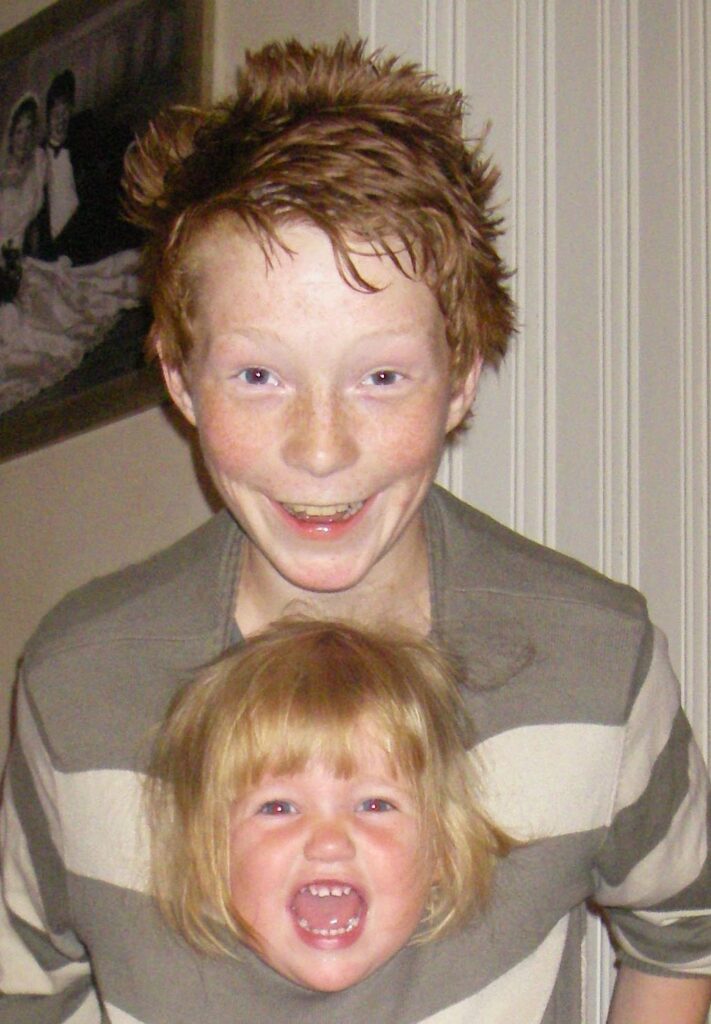
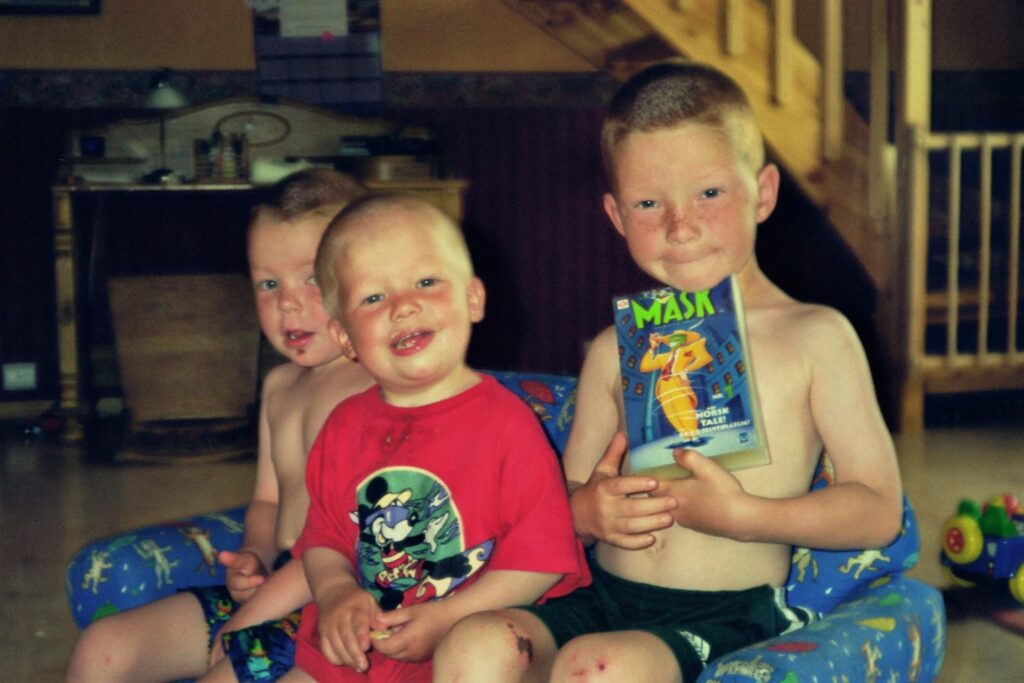
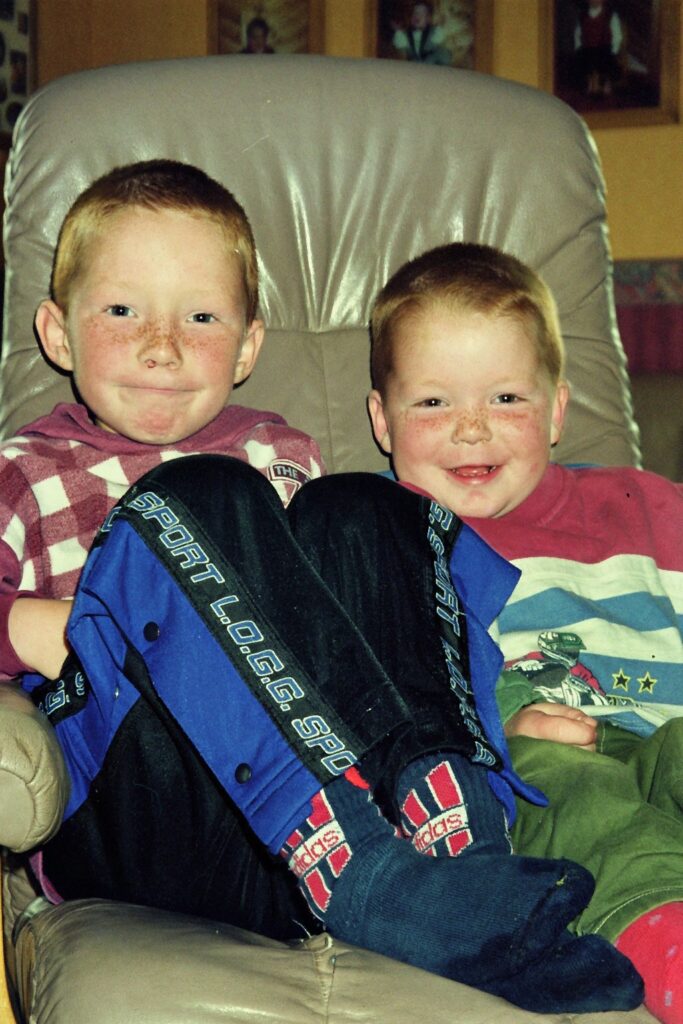
When Grief Leaves No Room for Practical Questions
While I sat beside Aleksander, completely absorbed in my grief, the emergency personnel repeatedly asked me which funeral home they should contact. I could barely comprehend that my son had died. I had no capacity to think about funeral arrangements or practical decisions. I did not answer. But the questions continued. Eventually, I told them they would have to make that decision themselves. I simply could not deal with it. I remember experiencing one of the emergency workers as increasingly impatient with my inability to respond. I felt pressured to answer a question that, in that moment, was impossible for me to consider.
Looking back, I have often reflected on what happens when established procedures meet a human being in profound shock. How much do we truly understand about the needs of people experiencing an acute crisis? And how easily can our determination to complete practical tasks prevent us from recognising the emotional reality of the person standing before us?
The Last Time I Held Him
After sitting beside Aleksander for some time, I gently lifted the blanket covering him. He was still wearing his everyday clothes. His trousers, sweater and woollen socks. Clothes I had bought for him. I noticed the deep mark around his neck. I was shaken by the physical evidence of how he had died. At the time, I could hardly comprehend that my son had ended his life in such a way.
Later, when we examined the history on Aleksander’s computer, we discovered that he had searched online for information about suicide. It became clear that he had been thinking about ending his life for some time. We also found evidence that he had considered different ways of doing so.
How Aleksander Was Found
Aleksander was discovered by a friend who lived in the bedroom next to his. According to what we later learned, approximately an hour had passed since his death. His friend had gone into Aleksander’s room while looking for something from the kitchen. At first, he did not realise what had happened. It was only as he was leaving the room that he saw Aleksander. He cried out, and another friend immediately came running. In Aleksander’s bed, there was a notebook. Inside it, he had written one and a half lines before his death. The words were:
“This is for my own good and everyone else’s. The last year.”
Those were the final words Aleksander wrote in that notebook. On another page, he had written a passage in English. We do not know whether he wrote it on the day he died or a few days earlier. I have preserved his words as he wrote them:
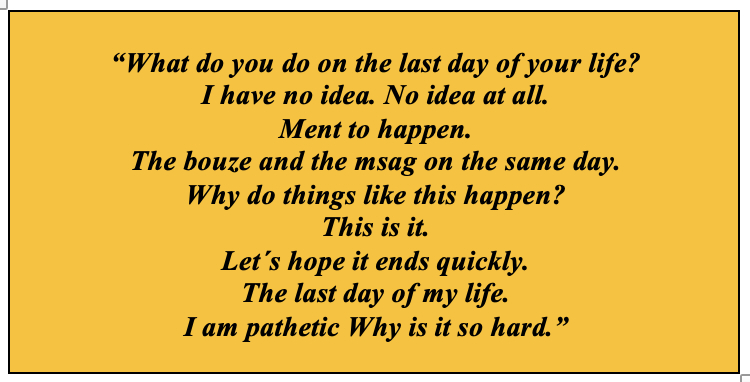
These words remain profoundly painful to read. They offer a glimpse into the suffering Aleksander was carrying, much of which we did not fully understand at the time.
Returning Home Without Aleksander
After a little more than an hour, the emergency personnel needed to complete their work so that Aleksander could be taken to the University Hospital of North Norway in Tromsø. My daughter and I left the house and returned to the car, where her younger sister and friend were waiting. During that time, my eldest daughter had already gone back to explain what had happened and why they could not enter the house. She had also called Sten Magne to tell him the devastating news. I got behind the wheel and drove home. I was almost completely disconnected from the world around me. The journey took approximately ten minutes.
By the time we arrived, the news had already reached our small community. Several of my youngest daughter’s friends were asking whether she wanted to spend time with them. In just ten minutes, word of Aleksander’s death had spread. Digital communication allows news to travel with extraordinary speed, even when a family has barely begun to comprehend what has happened. We did not deny the news. We confirmed that Aleksander had died, but we were unable to say anything more. We had more than enough to deal with simply trying to exist in those first moments. We contacted our closest family members, and Sten Magne began making his way home from a work assignment.
Our Final Goodbye
The hours that followed were dominated by tears, shock and overwhelming grief. None of us slept during the first twenty-four hours. We were devastated. Yet we gathered enough strength to go together to the University Hospital of North Norway, where we would see Aleksander one final time before his funeral. He had been kept in the hospital’s mortuary and was brought into the hospital chapel, where he was laid out for us. I had encouraged his siblings to consider saying goodbye to him in person.
When I had seen Aleksander on the sofa the previous evening, he had looked so natural and peaceful that I believed it might help us to see him once more. All his siblings chose to come. I was, however, surprised by how much his appearance had changed overnight. His face had become more bluish, and there was a slightly unfamiliar quality to his features. The hospital staff had carefully covered the injury to his neck so that it would not be distressing for those saying goodbye. He lay beautifully arranged in the centre of the chapel.
We stood around him as parents and siblings. And in the quiet of that room, we said our final goodbye. Despite the unbearable circumstances, we all felt that being able to see Aleksander one last time had been important. We had been given a moment to be together with him, to honour him and to say goodbye in our own way.
The Love Aleksander Carried in His Heart
Aleksander had experienced a deep and meaningful love. For more than a year, he had been in a relationship with a young woman named Andrea, who lived in Maryland, on the East Coast of the United States. Their love had crossed the Atlantic Ocean, connecting two young people who dreamed of sharing a future together. They had spoken about building a life in Maryland, where Andrea lived. For Aleksander, this relationship carried love, hope and the possibility of a future he wanted to be part of.
When their relationship came to an end, Aleksander was devastated. The heartbreak affected him deeply, and he carried much of his suffering in silence. He did not tell us about the breakup or the depth of the pain he was experiencing.
Looking back, I understand that the loss of this relationship was one of the significant emotional burdens Aleksander was carrying during the final period of his life. His heart was broken, and the grief he experienced became overwhelming. We will never know everything that was happening inside him, or fully understand how the different struggles in his life came together during those final days.
In the years since Aleksander’s death, Andrea and I have remained in contact. I have also had the privilege of supporting her through her own journey of grief, healing and understanding. Years have passed, and the love that once connected these two young people remains a meaningful part of Aleksander’s story. Andrea has kindly given me permission to share a love letter she wrote to Aleksander while they were still together.
It is a beautiful letter, filled with tenderness, affection and love. Reading her words reminds us of the young man who was loved, who dreamed of a future, and whose life held so much more than the circumstances of his death. I share this letter with gratitude and respect for Andrea, for the love they shared, and for the memory of my beloved son.
Because Aleksander’s story also deserves to be remembered through the love he gave and the love he received.

A Message From Aleksander
In February 2002, when Aleksander was a little boy, he wrote these words to me:
“DU ER VERDENS SNIESTE MAMMA — DU ER SÅ SNIL SÅM GUD.”
In English: “You are the kindest mum in the world — you are as kind as God.”
— Aleksander, February 2002
These are words I will carry in my heart for the rest of my life. They remind me of the love that lived within Aleksander from the time he was a little boy, a love that continued to shape the young man he became.

Understanding Suicide and the Pain We Cannot Always See
The reasons behind suicide are deeply complex and interconnected. When someone we love dies by suicide, we search for answers. We revisit conversations, memories, relationships and moments we wish we had understood differently. We try to make sense of something that has shattered our understanding of life. We want to know why. We want to understand how someone we love could reach a place where continuing to live felt unbearable.
Aleksander had already experienced more physical suffering in his young life than many people encounter in an entire lifetime. When he was only three years old, he was diagnosed with liver cancer. He survived, but his childhood would bring further challenges. At the age of eleven, Aleksander was involved in an accident that injured his heels and eventually led to severe, persistent back pain. The consequences would follow him throughout his teenage years, affecting his physical abilities and limiting the life he wanted to live.
Football was Aleksander’s greatest passion. He was an exceptionally talented player who came alive on the football field. It was where his energy, determination and natural abilities could flourish. He dreamed of becoming a professional footballer, and for a young boy who loved the game so deeply, that dream meant everything. But as the pain intensified, his body could no longer keep up with his ambitions. Eventually, Aleksander had to let go of his dream of playing professional football. He had to give up something he loved with all his heart.
For an active young boy who wanted to run, compete, play and experience life through movement, living with constant physical pain was an enormous burden. His body demanded rest when his spirit wanted to move. The pain could become so intense that it left him unable to participate in the activities that had once brought him so much joy.
Throughout his teenage years, Aleksander faced many struggles and setbacks. He lived with a body that caused him significant suffering every day, and with the frustration of being unable to live as freely and actively as he wished. Alongside these physical challenges, he also experienced the emotional struggles of growing up, including the profound heartbreak that followed the end of his relationship with Andres.
These experiences were all part of the life Aleksander had lived. They help us understand the weight he had carried, the challenges he had faced and the suffering that was not always visible to those around him. Yet I do not share these experiences as an explanation for why Aleksander ended his life. No single illness, injury, loss or heartbreak can tell us everything about another person’s inner world. Suicide is complex, and even those closest to someone may never fully understand how their different experiences and struggles came together.
As his mother, I have spent years reflecting on Aleksander’s life. I remember the little boy who survived cancer, the gifted footballer who flourished on the field, the teenager who struggled with relentless physical pain, and the young man who loved deeply and dreamed of a future. I remember his determination, his sensitivity, his humour and the love he carried within him. I also understand how much suffering a human being can carry while the world continues to see only what is visible on the outside.
This is why I believe we must learn to listen more carefully, to recognise the suffering that is not always spoken, and to understand how deeply chronic pain, loss and emotional struggles can affect a person’s experience of life. Aleksander’s life deserves to be remembered in its fullness. Through his courage, his talents, his dreams, his struggles, his relationships and the love he gave and received.
Aleksander Lennert Nordberg will always be my son. He will always be part of our family, our history and our hearts. And everything he lived through, everything he loved and everything he dreamed of will forever remain part of the story we carry forward.
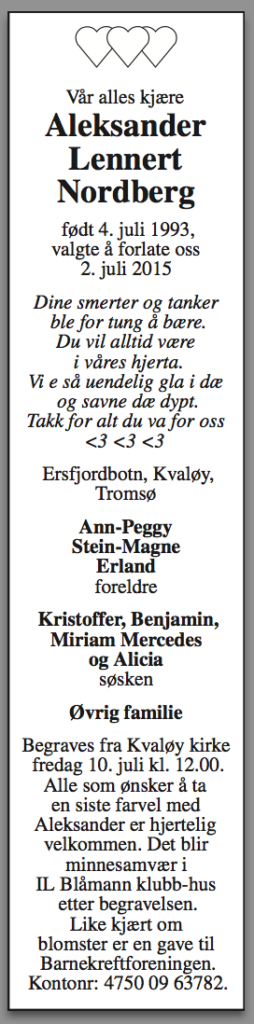
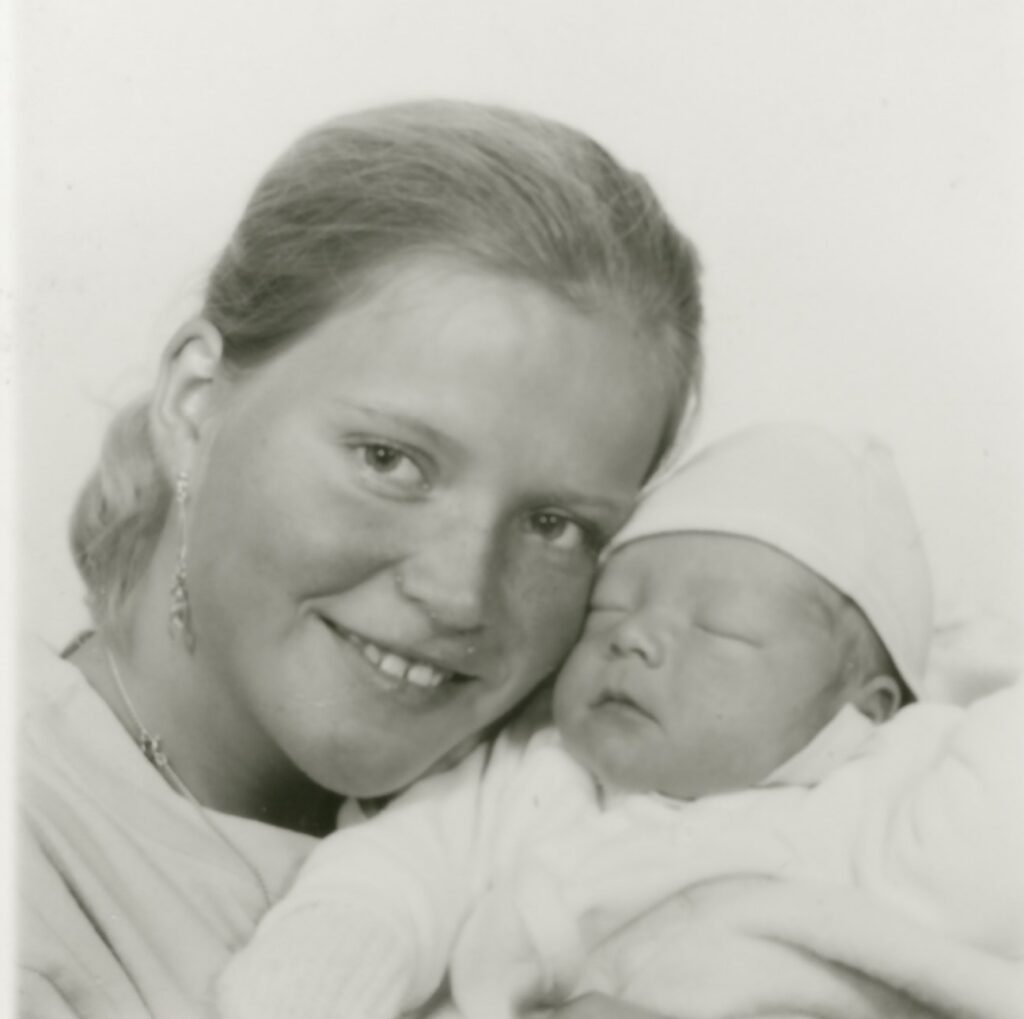
Aleksander & Ann-Peggy, 10th of July 1993