
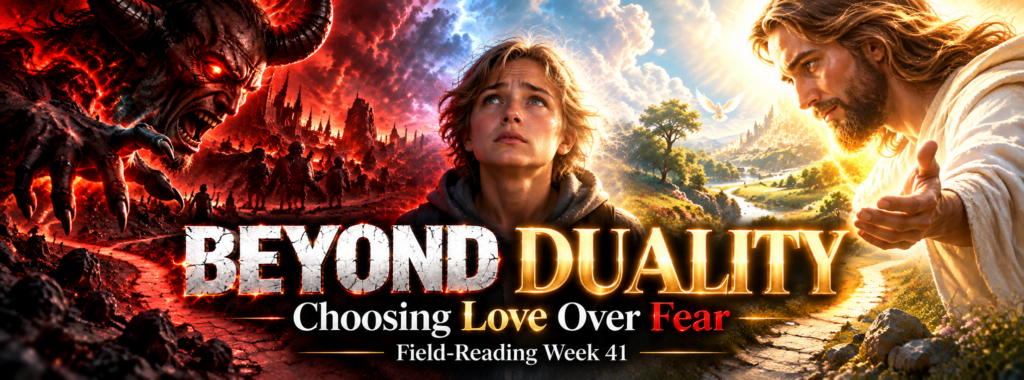
BEYOND DUALITY — Choosing Love Over Fear Field-Reading Week 41
This week, I have been reflecting deeply on duality and polarity, and on the choices we make when these opposing forces become visible in our lives. We speak about good and evil, light and darkness, love and fear, and we often experience them as forces pulling humanity in opposite directions. Within my own understanding of consciousness, I see these polarities as part of the earthly experience, part of the conditions through which we learn to recognize ourselves, understand the consequences of our actions, and become increasingly conscious of the reality we participate in creating.
And the more I observe what is happening around us, the more important one particular realization becomes to me: Every single day, through the smallest and the greatest decisions we make, we are choosing the consciousness from which we live.
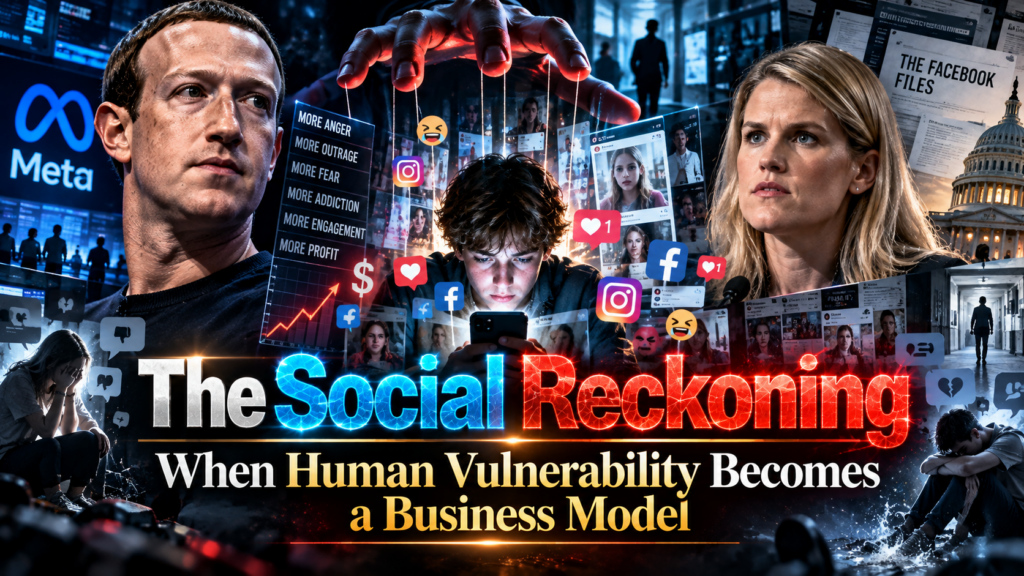
The Social Reckoning — When Human Vulnerability Becomes a Business Model
This week, on October 9, the film The Social Reckoning was released, bringing renewed attention to one of the most disturbing revelations about the digital world we have created. The film, written and directed by Aaron Sorkin, is inspired by the events surrounding The Facebook Files, the investigation published by The Wall Street Journal in 2021 after former Facebook employee Frances Haugen provided thousands of internal company documents to journalist Jeff Horwitz.
The documents revealed serious concerns within Facebook about the consequences of its own platforms, including the effects of Instagram on vulnerable teenagers, the spread of harmful content, and the ways engagement-driven systems could amplify anger and division. They raised fundamental questions about what happens when a company possesses evidence that aspects of its products may be harming people, while its business depends on keeping those same people engaged for as long as possible.
For me, the most disturbing part of this story is what it reveals about the relationship between human psychology and the systems we build around it. We know that human beings are sensitive to rejection, social comparison, fear, humiliation and the need to belong. We know that anger can capture attention, that conflict can spread rapidly, and that people who feel threatened or excluded may become increasingly vulnerable to messages that reinforce their insecurity. When technology is designed to maximize engagement without sufficient protection against these dynamics, our deepest human vulnerabilities can become part of the machinery through which enormous financial value is created.
Mark Zuckerberg, as the founder and leader of Facebook and Meta, has held extraordinary influence over the direction of these platforms. That influence carries an equally extraordinary responsibility. The revelations brought forward by Frances Haugen invite us to examine the ethical choices made by those who design, govern and profit from digital systems, including decisions about algorithms, safety, transparency and the protection of young people. Meta has disputed important allegations about its practices and research, but the broader question remains deeply relevant:
How much human suffering are we prepared to tolerate in the pursuit of growth, influence and profit?
I see this as an expression of the fear-based patterns humanity is being invited to recognize. Fear can manifest as the need to control, the need to dominate, the fear of losing power, the fear of losing status, or the belief that there will never be enough. These patterns do not belong exclusively to wealthy individuals or powerful corporations. We can recognize smaller versions of them in our own lives, in our workplaces, in our families, in our communities and in the moments when protecting our own position becomes more important than considering the consequences of our actions for someone else.
And within this story, there is also another human being whose choices deserve our attention. Frances Haugen chose to bring information into the public eye despite the personal and professional consequences of challenging one of the most powerful technology companies in the world. Whatever one thinks about every aspect of the controversy, her decision reminds us that systems are changed when individuals are willing to question what has become accepted, speak about what they have witnessed, and place the well-being of others above their own immediate comfort.
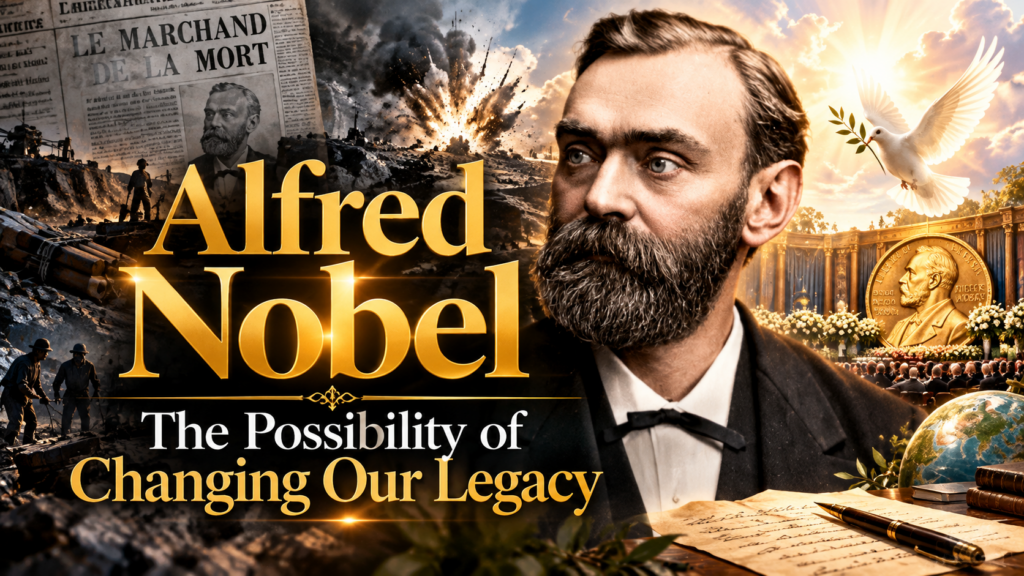
Alfred Nobel — The Possibility of Changing Our Legacy
As I reflected on the responsibility carried by people who have accumulated enormous wealth and influence, I found myself returning to the story of Alfred Nobel, the Swedish inventor and industrialist whose name is now associated with some of the most respected awards in the world.
Nobel invented dynamite and built a vast industrial enterprise connected to explosives and armaments. His inventions had important applications in engineering and construction, but they were also associated with warfare and destruction. In 1888, when his brother Ludvig died, newspapers mistakenly reported Alfred Nobel’s death, and one French obituary described him as a merchant of death. According to a widely repeated account, Nobel was confronted with the disturbing possibility of seeing how the world might remember him after he was gone.
I find this story profoundly meaningful because it brings us face to face with something most human beings rarely have the opportunity to experience: seeing our own legacy while we are still alive, and discovering that the consequences of what we have created may be very different from the story we have been telling ourselves.
In 1895, Nobel signed his final will, directing the greater part of his fortune toward prizes recognizing achievements in science, literature and peace that would benefit humanity. The wealth he had accumulated became the foundation for an enduring institution that continues to recognize human contribution long after his death.
There is an extraordinary possibility contained within the human capacity for self-reflection, because we can recognize the consequences of our choices and begin to act differently while we are still here. And I would extend that invitation to Mark Zuckerberg and to every person who holds influence over the lives of others. The past cannot be undone, and changing direction does not erase the responsibility for what has already happened. But there is still a future to shape, still an opportunity to repair harm, protect vulnerable people, and use extraordinary resources in ways that genuinely serve humanity.
It is never too late to begin choosing differently.
Peder Angel — When the Fear of Difference Becomes Cruelty
And then there is a personal story from Norway that has touched me deeply. His name was Peder Angel Langen Lundquist. He was a young Norwegian man from Røros, a talented singer and performer with his own interests, his own way of dressing and his own way of being in the world. He was only nineteen years old when he died by suicide on February 13, 2024. His parents have spoken publicly about the long-term bullying he experienced, and their efforts to raise awareness have helped bring national attention to the devastating consequences of exclusion, harassment and failures to protect vulnerable young people.
His parents have continued to speak about what happened to their son, even while carrying a grief that no parent should ever have to experience. Their work is a call for greater responsibility from schools, institutions, parents and the wider community. And it asks us to examine how cruelty can be allowed to continue when the adults and systems surrounding a young person have a duty to intervene.
How does a young person continue to believe in their own value when the people around them make their differences a reason for rejection?
And how do we explain a society in which being unusual, sensitive, creative, vulnerable or simply unwilling to conform can become an invitation for others to exercise power through cruelty?
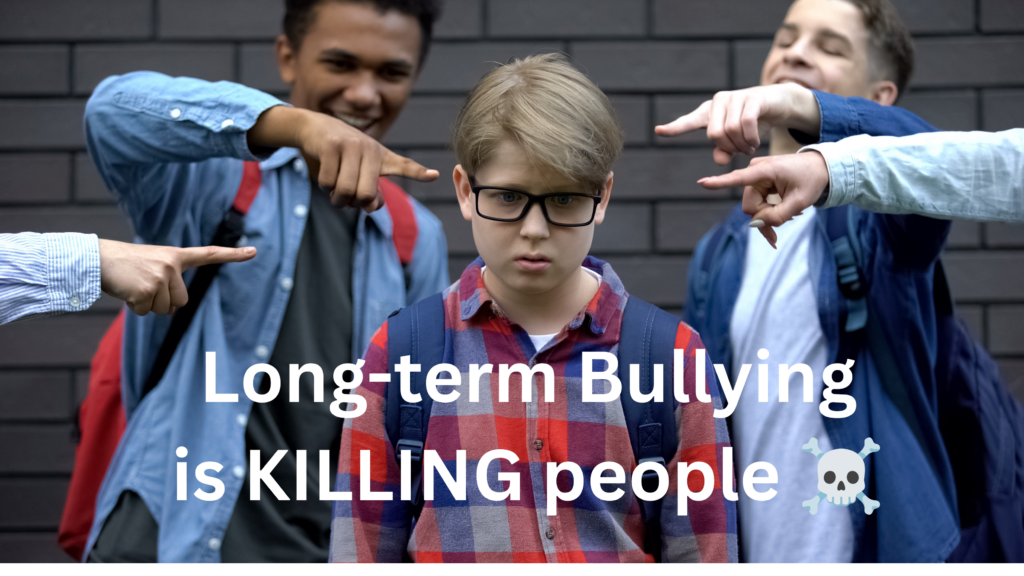
There is something deeply disturbing about the human need to make another person smaller in order to feel larger ourselves. In some circumstances, bullying grows out of insecurity, fear of exclusion, social competition and the desire to belong to a dominant group. Sometimes people participate because they are afraid of becoming the next target. Sometimes they remain silent because confronting the group would require them to risk their own position. And sometimes adults recognize that something is wrong but fail to respond with the urgency and responsibility the situation demands.
Whatever the psychological mechanisms involved, the suffering is real, and the consequences can be devastating. I believe that one of the most important expressions of love is our willingness to allow another human being to be different. To encounter someone whose appearance, beliefs, sensitivity, identity, abilities or way of living is unfamiliar to us, and still recognize their full humanity. To understand that another person’s uniqueness does not threaten our own existence, and that the world becomes richer when people are allowed to develop according to their own nature.
We must also recognize that suicide is complex and cannot be reduced to one cause. Yet the suffering associated with prolonged bullying is serious, and Peder Angel’s story reminds us why every warning, every disclosure and every experience of exclusion deserves to be taken seriously.
As adults, we carry responsibility for the environments children grow up within. We teach them through our language, our judgments, the way we speak about people who are different, and the way we respond when someone is being humiliated. Children notice which behaviors we excuse, which forms of cruelty we dismiss as harmless, and whether we have the courage to stand beside someone who is being excluded.
Love becomes visible in the moment someone needs us to act.
Fear, Separation and the Human Psyche
When I speak about fear in this week’s Field-Reading, I am speaking about something that reaches deeply into the human psyche. Fear is a natural biological response that helps protect us from danger, and there are situations in which it is essential for survival. But fear can also become a persistent way of perceiving the world, particularly when our experiences have taught us that other people are dangerous, that differences are threatening, or that our own security depends on remaining in control.
Over time, these patterns can become so familiar that we no longer recognize them as patterns. We may believe we are simply defending what is right, protecting our interests or responding to the behavior of others, while underneath our reactions there may be an old fear of rejection, abandonment, humiliation, powerlessness or loss.
This is where duality becomes particularly significant. We begin to experience ourselves as separate from the people around us, dividing the world into those who belong and those who do not, those who agree with us and those who must be opposed, those whom we consider worthy of compassion and those whom we have decided no longer deserve it.
The moment another human being becomes only an enemy, an obstacle, a label or a threat, something happens to our capacity to recognize the shared humanity between us. And this is where our deepest inner work begins. Because the patterns of fear cannot be transformed through denial. They need to become visible, understandable and conscious, and we need enough inner stability to recognize them without immediately surrendering our actions to them. We can acknowledge anger without allowing it to become cruelty, recognize fear without using it to justify exclusion, and experience disagreement without destroying the dignity of the person standing before us.
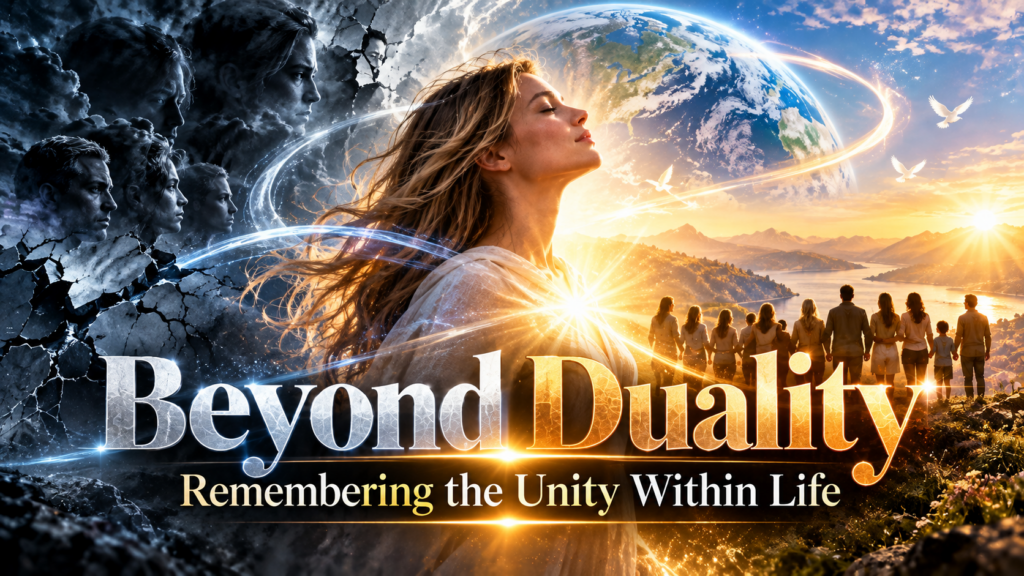
Beyond Duality — Remembering the Unity Within Life
Human beings encounter contrasts throughout our lives, and through these contrasts we become increasingly aware of our values, our choices, our wounds and our capacity to create. We learn through relationships, through the consequences of our actions, through the experiences that challenge us, and through the moments when we discover that the way we have been living can no longer carry us forward.
But there is a consciousness available to us that allows us to experience life beyond the constant identification with these opposing forces. I understand this as Christ Consciousness.
For me, Christ Consciousness is the remembrance of our deeper unity with life, with God, with one another and with the Divine Source from which we emerge. It is an awareness that invites us to recognize something sacred within every human being, even when their actions are difficult to understand, even when we strongly disagree, and even when responsibility and firm boundaries are necessary.
When I look at the life and teachings of Jesus, I see a radical invitation to live with an open heart. I see the courage to approach those whom society rejected, to challenge hypocrisy and abuse of power, to recognize dignity where others saw shame, and to bring compassion into places where fear had created division. This is the understanding of Christ Consciousness that I have spent years exploring and learning to embody.
It asks something profound of us because it reaches into the ordinary moments of everyday life. It asks how we speak to our children when we are exhausted, how we respond to someone who disagrees with us, how we treat the person who cannot offer us anything in return, and how we use whatever influence, resources or authority we have been given.
It also asks whether we can remain loving while saying no, whether we can protect ourselves and others without becoming consumed by hatred, and whether we can confront harmful behavior while continuing to recognize the humanity of the person responsible.
This is where the movement beyond duality becomes real to me. I do not need to deny the existence of suffering, injustice or destructive behavior in order to live from love. I need to become increasingly conscious of the inner state from which I meet these realities, because that state influences my words, my decisions, my relationships and the consequences I create.
Choosing Love in Every Moment of Every Day
My inner state is one of the most important responsibilities I carry. I cannot control every event that takes place in the world, and I cannot determine how another human being chooses to behave, but I can continue developing my capacity to recognize what is happening within me and choose how I respond. This has become a deeply personal practice of living Christ Consciousness.
There are moments when I encounter dishonesty, cruelty, manipulation or actions that I find profoundly disturbing, and I feel the human responses that arise within me. I can experience sadness, frustration, anger and the deep pain of witnessing unnecessary suffering. These emotions are part of my humanity, and I have no desire to pretend that spiritual maturity means becoming untouched by the world. But there is a space within me where I can meet these experiences consciously, where I can allow the emotions to be present without allowing them to determine everything I do next.
And within that space, I choose. I choose to speak truthfully. I choose to remain compassionate. I choose to recognize when boundaries are needed, when action is necessary, and when silence would make me complicit in something I know is harmful. I choose to remember that the person standing before me carries a life as complex and meaningful as my own, even when I cannot understand the choices they are making.
I also recognize that this is a lifelong practice. There are moments when our nervous systems become overwhelmed, when old wounds are activated, and when we need time, support and care before we can respond with the clarity we wish to embody. The invitation to choose love should never become another reason to judge ourselves for experiencing fear. The practice is to return, again and again, to the consciousness I wish to live from.
The light we speak about in spiritual traditions must eventually become visible through our human behavior. It needs to be present in our families, in our schools, in our workplaces, in our digital environments, and in the way we make decisions that affect people we may never meet.
Every choice leaves something behind in the lives of others.
We are constantly creating through the ways we relate to these opposing forces, and every encounter offers an opportunity to become more conscious of what we are bringing into the world.
A Gift from My Heart — The Many Faces of Christ Consciousness
This week has also brought something deeply meaningful into my own life, because my book, The Many Faces of Christ Consciousness — The Architecture of Divinity, has now been published.
This book has grown from years of personal experiences, spiritual exploration, inner transformation and the gradual embodiment of Christ Consciousness. It is rooted in my own journey of remembrance and in the realization that the Divine can be experienced within the ordinary reality of being human, through our relationships, our bodies, our choices and the way we meet life.
And I want to make something very clear. Christ Consciousness is something that reaches beyond religious institutions, inherited doctrines and the boundaries that human beings have created between spiritual traditions. I understand the life of Jesus as a profound demonstration of what becomes possible when a human being lives with a radically open heart, guided by love, compassion, truth and an awareness of unity. This invitation belongs to all of humanity, regardless of religious background or personal beliefs.
To celebrate the publication of the book, and because I want this understanding to be accessible to anyone who feels drawn to explore it, I am offering five chapters completely free, available in both Norwegian and English.
This is a gift from my heart, an invitation to enter the exploration at your own pace, to reflect on the nature of consciousness and divinity, and to discover whether something within these pages resonates with your own experience of being human.
The World We Choose to Create
As I bring this week’s Field-Reading to a close, I find myself returning to the people whose stories have moved through my reflections: These stories belong to very different circumstances, yet together they reveal something essential about the human condition. We possess an extraordinary capacity to influence one another, sometimes through decisions that reach millions of people, and sometimes through a single word, a moment of courage, an act of exclusion, or a gesture of compassion toward someone who desperately needs to know that they belong.
The fear patterns becoming visible in our world are inviting us to examine the consciousness through which we have been living, and to recognize the places where our actions are still shaped by separation, insecurity, domination and the refusal to accept human difference.
There is a great deal of work ahead of us, and some of that work will require changes to institutions, laws, technologies and the systems through which we organize our societies. But it also requires something intimate and deeply human: the willingness to look within ourselves and become responsible for the quality of consciousness we bring into our encounters with life.
This is the living invitation of Christ Consciousness, and it is the path I continue to walk every day. We are here on Mother Earth, experiencing the extraordinary complexity of being human, learning through duality and polarity, through love and fear, through the consequences of our choices and the opportunities we are given to grow beyond the patterns that have shaped us. And every moment offers us another opportunity to remember the unity that exists beneath our differences, and to allow that remembrance to become visible in the way we live.
The world we create tomorrow is being shaped by the consciousness we choose to live from today.